
As consumers, brands, and regulators push for clearer product information and control over which products enter and are transacted in the EU market, Digital Product Passports (DPPs) are the tool of choice to enable this shift, introduced as a mandatory requirement by European law. Digital Product Passports are becoming part of the infrastructure used to identify products and make structured information available across value chains. In the European Union, the Ecodesign for Sustainable Products Regulation establishes the horizontal framework, while product-specific legislation determines when a DPP is required and which information it must contain.
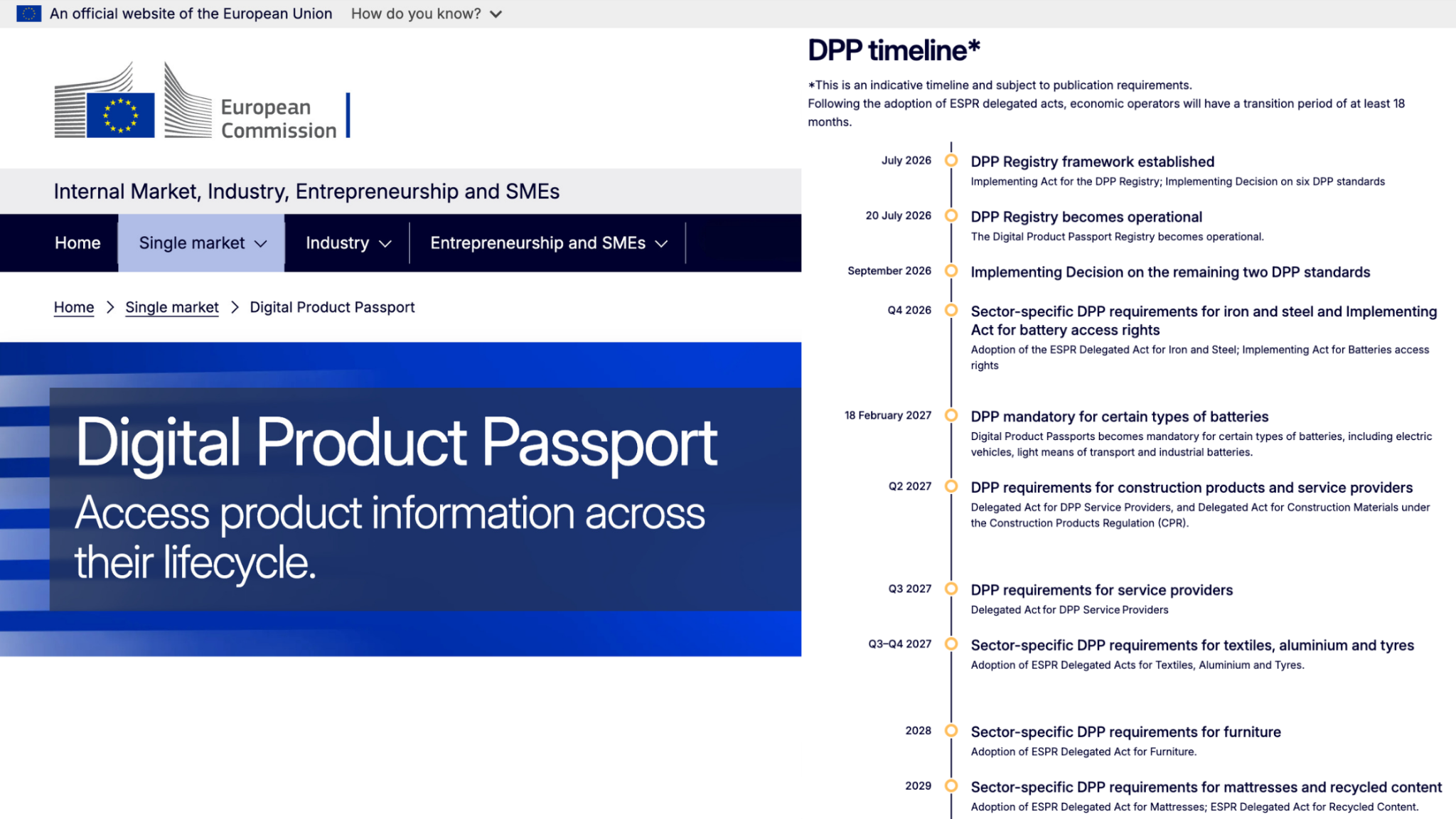
The common EU infrastructure is now taking shape: the Digital Product Passport Registry is operational, the European technical standards have been published, and product-specific requirements are being developed progressively across different categories.
According to the European Commission, the Digital Product Passport is designed to fundamentally transform how product information is created, shared, and used across the Single Market, benefiting businesses, consumers, and regulators alike.
Questa guida raccoglie ciò che devi sapere sui passaporti digitali di prodotto, da cosa sono al perché sono importanti e come trasformeranno la trasparenza della moda negli anni a venire.
The European Commission defines a Passaporto digitale di prodotto as a digital container of product-specific information that acts as a digital identity for a product.
Questa identità digitale consente la tracciabilità e la trasparenza lungo l'intera catena del valore del prodotto: dalla produzione all'uso, al riutilizzo e alla fine del ciclo di vita.
The mandatory dataset is not the same for every product. It is defined by the legislation applicable to each product group. Depending on the category, a DPP may include information such as:
Tutte queste informazioni sono accessibili tramite un supporto dati, in genere un codice QR o simile, collegato a sistemi digitali quali registri e portali web.
I passaporti digitali di prodotto sono una risposta alle sfide strutturali del mercato unico.
La Commissione Europea sottolinea che i DPP hanno lo scopo di:
In short, DPPs aim to support a more transparent, sustainable, and circular economy across the full product lifecycle, including fashion.
The core legal basis for Digital Product Passports is the Ecodesign for Sustainable Products Regulation (ESPR).
Con l' ESPR:
Questo approccio consente all'UE di adattare i requisiti DPP garantendo al contempo la coerenza tra i vari settori.
Secondo il quadro della Commissione, i DPP si basano su tre elementi fondamentali:
I prodotti fisici riportano un codice QR o un identificatore simile che rimanda direttamente al passaporto digitale.
Digital Product Passports operate through a decentralised architecture. The passport data is hosted by the economic operator or its selected DPP service provider rather than stored in a single EU database.
The common EU Digital Product Passport Registry supports the registration and discovery of passports. Its functions include storing unique identifiers and relevant product metadata, validating registrations, supporting the verification of economic operators and providing the semantic references required for interoperability.
Access to DPP information depends on the applicable product rules. Consumers, manufacturers, authorities, customs, repairers and other actors may therefore access different information.
I diritti di accesso variano a seconda dell'utente: consumatori, produttori, regolatori e servizi di riciclo e riparazione interagiscono tutti in modo diverso con il DPP
I dati inclusi in un DPP sono definiti dal legislazioni secondarie e variano in base al gruppo di prodotti, come tessili, detergenti o giocattoli.
To make DPPs interoperable and scalable, CEN and CENELEC have published the eight European standards developed to support the Digital Product Passport system across eight technical areas, including:
In July 2026, the European Commission published the references of the first six standards in the Official Journal of the European Union. The remaining two standards have also been published by CEN and CENELEC and are awaiting formal reference by the Commission.
La tempistica della Commissione Europea prevede un'implementazione graduale e strutturata dei passaporti digitali di prodotto.
The ESPR established the horizontal legal framework for introducing Digital Product Passports through product-specific measures.
The Working Plan includes textiles, with a focus on apparel, as well as steel and aluminium, furniture, tyres, mattresses and selected energy-related products. (European Commission)
The EU Digital Product Passport Registry became operational in July 2026. CEN and CENELEC also completed the initial series of eight European DPP standards.
Battery Passports will become mandatory from 18 February 2027 for the battery categories covered by the Batteries Regulation.
Delegated acts will progressively define DPP requirements for priority product groups, including the applicable dataset, granularity, access rights and transition period. The textile delegated act is currently expected in 2027, but the final application date will depend on its adoption and transition provisions.
The cost of implementing a Digital Product Passport depends primarily on project complexity and scale, rather than a fixed per-product price. Key cost drivers include the number of SKUs covered, the level of data granularity, the depth of supply chain traceability, and the degree of integration with existing systems such as ERP, PLM, or e-commerce platforms.
In pratica, le soluzioni DPP entry-level per i piccoli marchi partono in genere da meno di 10.000 euro all'anno, mentre le aziende di medie dimensioni possono prevedere investimenti compresi tra 15.000 e 70.000 euro l'anno per funzionalità di tracciabilità e compliance più avanzate. Le grandi aziende con catene di fornitura globali complesse potrebbero richiedere soluzioni personalizzate, con costi che variano di conseguenza in base alle esigenze di integrazione, automazione e gestione continua dei dati.
Textiles and apparel are listed among the priority product groups in the ESPR Work Programme.
Ciò significa:
For fashion brands, this makes DPP readiness a strategic priority, not just a regulatory checkbox.
Dal punto di vista dell'UE, i DPP sono concepiti per semplificare la compliance aumentando al contempo la trasparenza.
Per i brand, questo si traduce in:
Allo stesso tempo, i DPP aprono le porte a un migliore processo decisionale interno e a nuovi modelli di business circolari.
Find out if your organization is aligned to Digital Product Passport compliance by downloading our whitepaper now.
For consumers, Digital Product Passports are about access and trust.
Sarai in grado di:
La trasparenza diventa parte integrante del prodotto stesso, consentendo la “cultura dei prodotti”.
I consumatori potrebbero aspettarsi nuove esperienze e un nuovo canale di comunicazione, soprattutto da parte di marchi e prodotti di lusso, rafforzando il legame con i loro acquisti.
The European Commission is making implementation resources available alongside the Registry, including a testing environment, user guides, technical documentation and support for economic operators. Additional rules and guidance will continue to be released as product-specific requirements are adopted.
Ciò denota un approccio collaborativo piuttosto che punitivo.
I passaporti digitali di prodotto vengono introdotti tramite regolamentazione, ma il loro impatto va ben oltre la compliance. Creano l'infrastruttura per un settore della moda più trasparente, circolare e basato sui dati.
Noi di Renoon consideriamo i DPP come una potente leva per allineare gli impegni di sostenibilità con informazioni verificate, consentendo ai brand di agire in modo responsabile e ai consumatori di scegliere con sicurezza.
Scopri gli insights di Renoon sui passaporti digitali di prodotto e sulla trasparenza mettendoti in contatto con noi Qui.