
.avif)

The textile Digital Product Passport delegated act has not yet been published. However, recent work from the European Commission and the Joint Research Centre (JRC) is already providing a clearer picture of what future requirements could look like for apparel and textile companies.
The latest JRC study on DPP content for textile apparel products proposes product scope, information categories, granularity options, and data structures that could help shape future Digital Product Passport requirements under the Ecodesign for Sustainable Products Regulation (ESPR).
While these proposals are not final yet, they currently represent the most detailed indication of how a textile Digital Product Passport may be implemented.
This article summarises what fashion brands should know as of June 2026 and will be updated as new regulatory developments emerge.
Textiles were identified as a priority product group when the ESPR entered into force on 18 July 2024 and were later confirmed among the priority categories in the ESPR Working Plan 2025–2030.
Since then, the European Commission and the Joint Research Centre (JRC) have been carrying out the preparatory work that will support the future textile delegated act. Three major JRC milestones have already been published, covering Digital Product Passport architecture, methodologies for defining DPP requirements, and proposed content for textile apparel products.
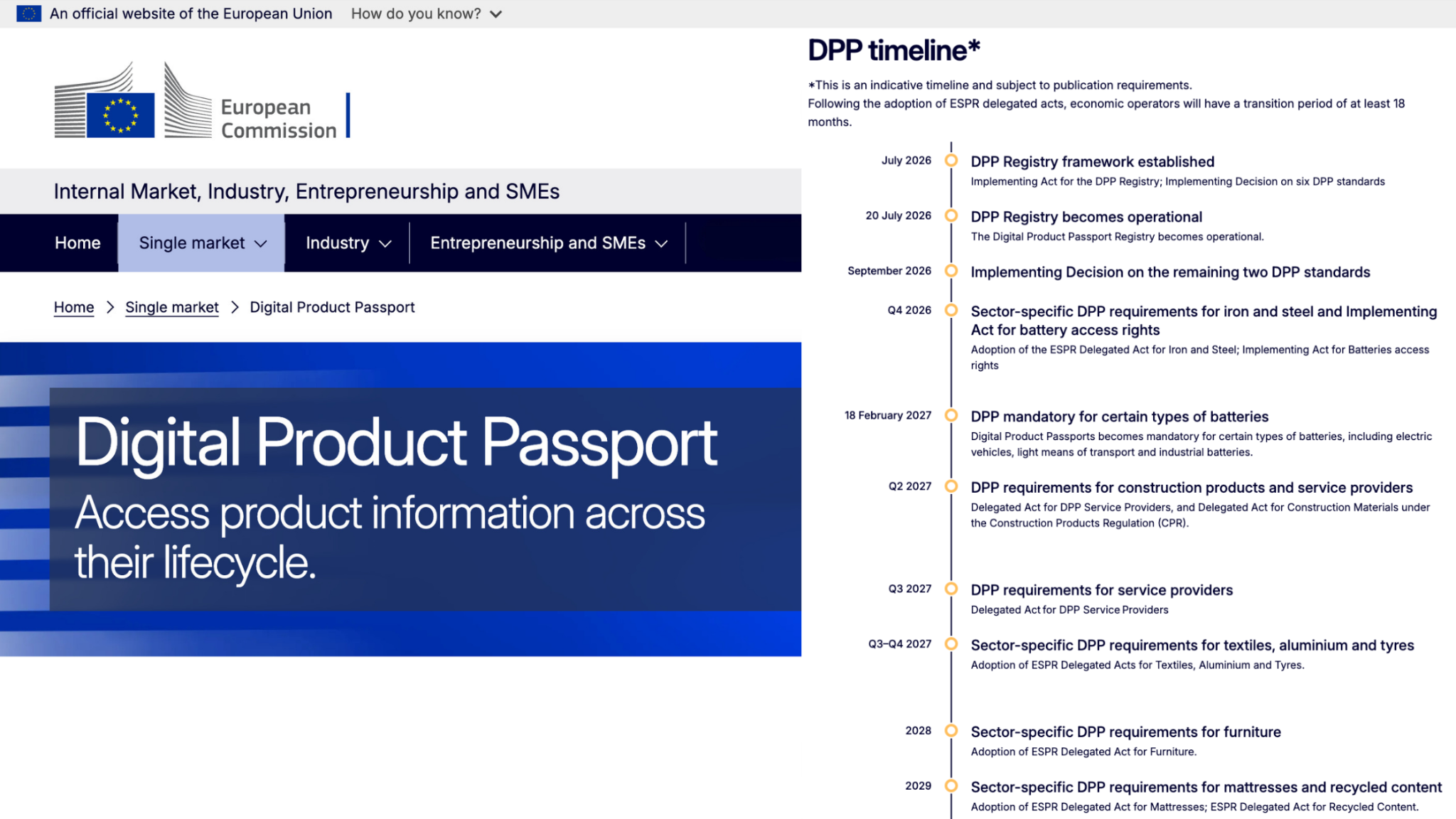
The next major step is the publication and adoption of the textile delegated act, which is expected by the end of 2027 according to the current ESPR implementation roadmap. In parallel, the European Commission is also developing implementing measures covering the DPP Registry, data carriers, and service-provider requirements.
While the final legal requirements have not yet been adopted, the studies published so far already provide the most detailed view currently available of the product scope, information categories, granularity options, and access-right structures being considered for textile Digital Product Passports.
According to the current JRC proposal, the future textile apparel Digital Product Passport would apply to apparel products containing at least 80% textile fibres by weight.
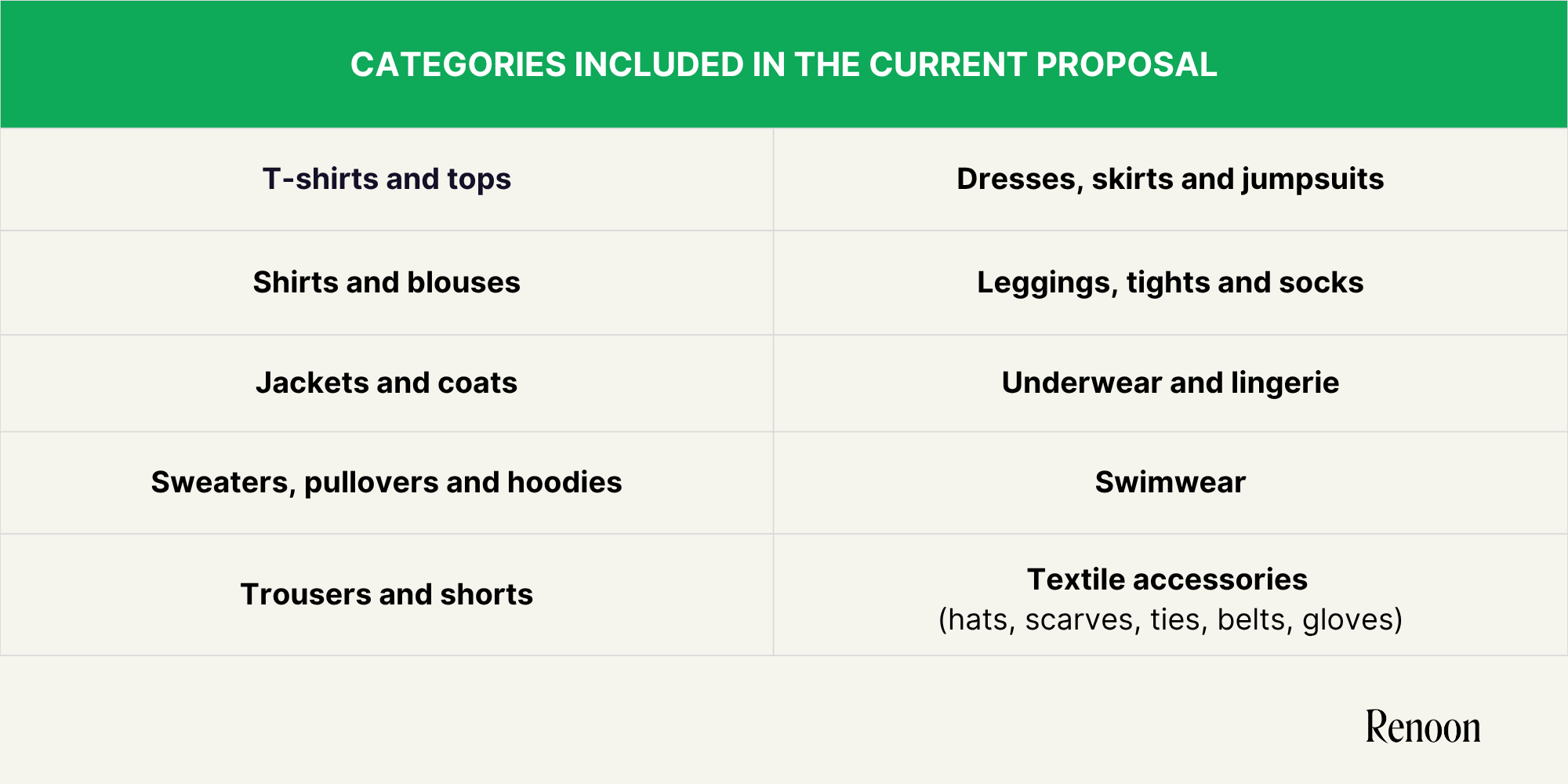
The proposal also includes technical sportswear and workwear falling within the textile apparel scope and do not belong to the following excluded categories.
The current proposal excludes several specialised textile categories due to their specific technical or regulatory characteristics.
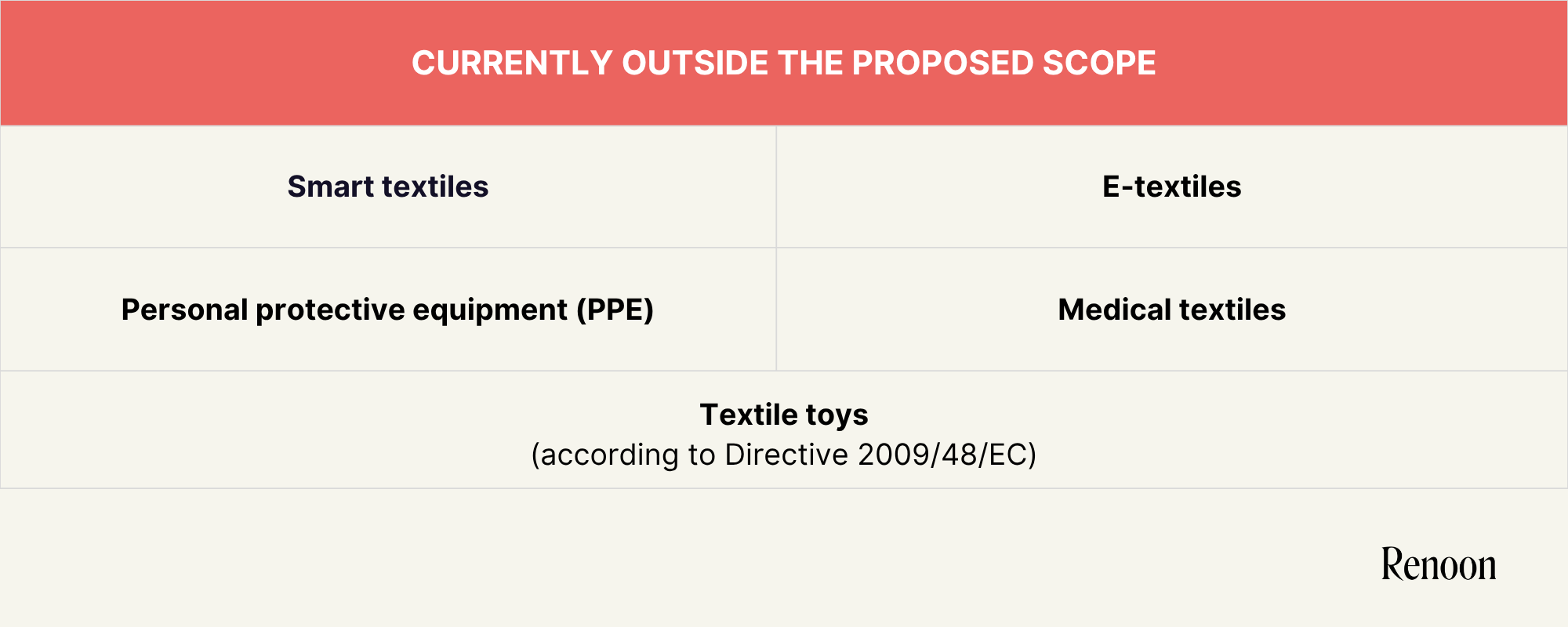
Some categories, including custom-made and certain upcycled products, may require further clarification as the regulatory framework develops.
The exact mandatory data fields will ultimately be defined through the future delegated act. However, the current JRC proposal already groups potential Digital Product Passport content into several broad categories.
Product identification: Product identifiers, model information
Producer information: Manufacturer and responsible operator information
Product information: Composition, care, durability-related information
Compliance information: Certificates, declarations, technical documentation
Other EU requirements: Information already required under other Union legislation
The proposal does not yet define final mandatory fields. However, it provides a strong indication of the types of information fashion brands may need to organise and maintain at product level.
Preparatory work published by the Joint Research Centre (JRC) already provides indications on how product granularity could be approached in the textile sector.
The studies discuss three possible levels of granularity:
- Model level
Information shared across a product model
- Batch level
Information linked to a production batch
- Item level
Information linked to an individual product
They also highlight that products belonging to the same model may be manufactured in different production runs, facilities, countries, or sourcing conditions. As a result, several proposed data elements are assessed at batch level rather than model level, and batch-level information is already widely used across textile production, certification, quality control, and traceability processes.
The granularity level ultimately defined in the textile delegated act will influence data collection requirements, traceability capabilities, consumer-facing experiences, and implementation costs.
Many of the information categories discussed in the proposal already exist within fashion organisations today.
They are often distributed across:
For many brands, the challenge is not creating entirely new information. The challenge is identifying where information already exists, structuring it consistently, and connecting it to the correct product record.
This is one of the reasons Digital Product Passport preparation increasingly becomes a product data and information management exercise rather than a simple compliance project.
Several elements still depend on the future textile delegated act.
These include:
However, many of the building blocks required to support a future Digital Product Passport are already visible.
The European Commission is developing rules covering the DPP Registry, data carriers, and Digital Product Passport service providers. These elements will support how Digital Product Passports are published, accessed, identified, and maintained over time.
As a result, preparation is no longer limited to understanding future product requirements. Organisations can already begin assessing how Digital Product Passports will be managed operationally once the framework becomes applicable.
Fashion brands should already be preparing, by:
Brands that begin this work early are likely to face a more structured implementation process once final requirements are adopted.
Textile Digital Product Passport requirements are still evolving, but important building blocks are already emerging through JRC studies and EU technical work.
Understanding product scope, information requirements, and implementation considerations early can help fashion brands prepare before the final delegated act is adopted.
Renoon continuously monitors Digital Product Passport developments and helps brands understand what information may be required, where it exists today, and how to build the infrastructure needed to support future compliance requirements.
Get in touch if you would like to assess your readiness for upcoming textile DPP requirements, or learn how Renoon supports brands in preparing the data and infrastructure needed for Digital Product Passports.


.avif)

.png)