Textile products are among the first priority product groups under the Ecodesign for Sustainable Products Regulation (ESPR). Under the current ESPR preparatory study, a textile product is defined as a product containing at least 80% textile fibres by weight, in line with Regulation (EU) No 1007/2011.
The European Commission is currently preparing the Textile Delegated Act, which will define the Digital Product Passport requirements for textile and apparel products. This page summarises the current regulatory framework, expected product scope and implementation timeline.
What is the Digital Product Passport for textiles?
The Digital Product Passport for textiles is the future digital record required under the Ecodesign for Sustainable Products Regulation (ESPR) for textile and apparel products placed on the EU market. The European Commission is currently preparing the Textile Delegated Act, which will define the final information requirements, product scope and implementation rules.
Textile Digital Product Passport regulatory framework
The Digital Product Passport for textile and apparel products is being developed through a series of European legislative and technical initiatives. Together, these define which products will be covered, what information will be required, and when the requirements will become applicable.
espr Working Plan
In force
Identifies textiles as a priority product groups
JRC Preparatory Study
In corso
Supports the development of textile requirements
Textile Delegated Act
Expected for 2027
Will define mandatory requirements
Textile products within the DPP scope
The current regulatory framework distinguishes between products already analysed through the JRC Preparatory Study and the broader textile categories that may be included in future delegated acts.
APPAREL
Current focus of the JRC Preparatory Study because it represents the largest textile market in the EU, has the highest environmental impact, and benefits from the most comprehensive existing research.
- T-shirts
- Shirts and blouses
- Sweaters and mid-layers
- Jackets and coats
- Pants and shorts
- Dresses, skirts, and jumpsuits
- Leggings, stockings, tighs, and socks
- Underwear
- Swimwear
- Technical textile apparel, like sportswear and workwear, if they fit within the "textile product" definition
- Textile apparel accessories:
- Hats
- Scarves and ties
- Belts
- Gloves and mittens
CURRENTLY EXCLUDED: Smart textiles, e-textiles, PPE, medical devices and toys
OTHER TEXTILE PRODUCTS
Not currently covered by the JRC Preparatory Study.Expected to fall within the broader textile product group under future delegated acts or future scope definition. Examples include:
- Bed linen
- Blankets
- Towels
- Curtains
- Upholstery textiles
- Rugs and carpets
The final product scope will be confirmed through the Textile Delegated Act.
Digital Product Passport data requirements for textile products
The final Digital Product Passport dataset for textile products has not yet been adopted. However, the current preparatory work provides an indication of the information expected to be included:
- Product identification
- Material composition
- Substances of concern
- Recycled content
- Manufacturer information
- Care instructions
- Technical documentation
- Environmental performance information
The final mandatory dataset will be established through the Textile Delegated Act and related implementing measures.
DPP data carrier requirements
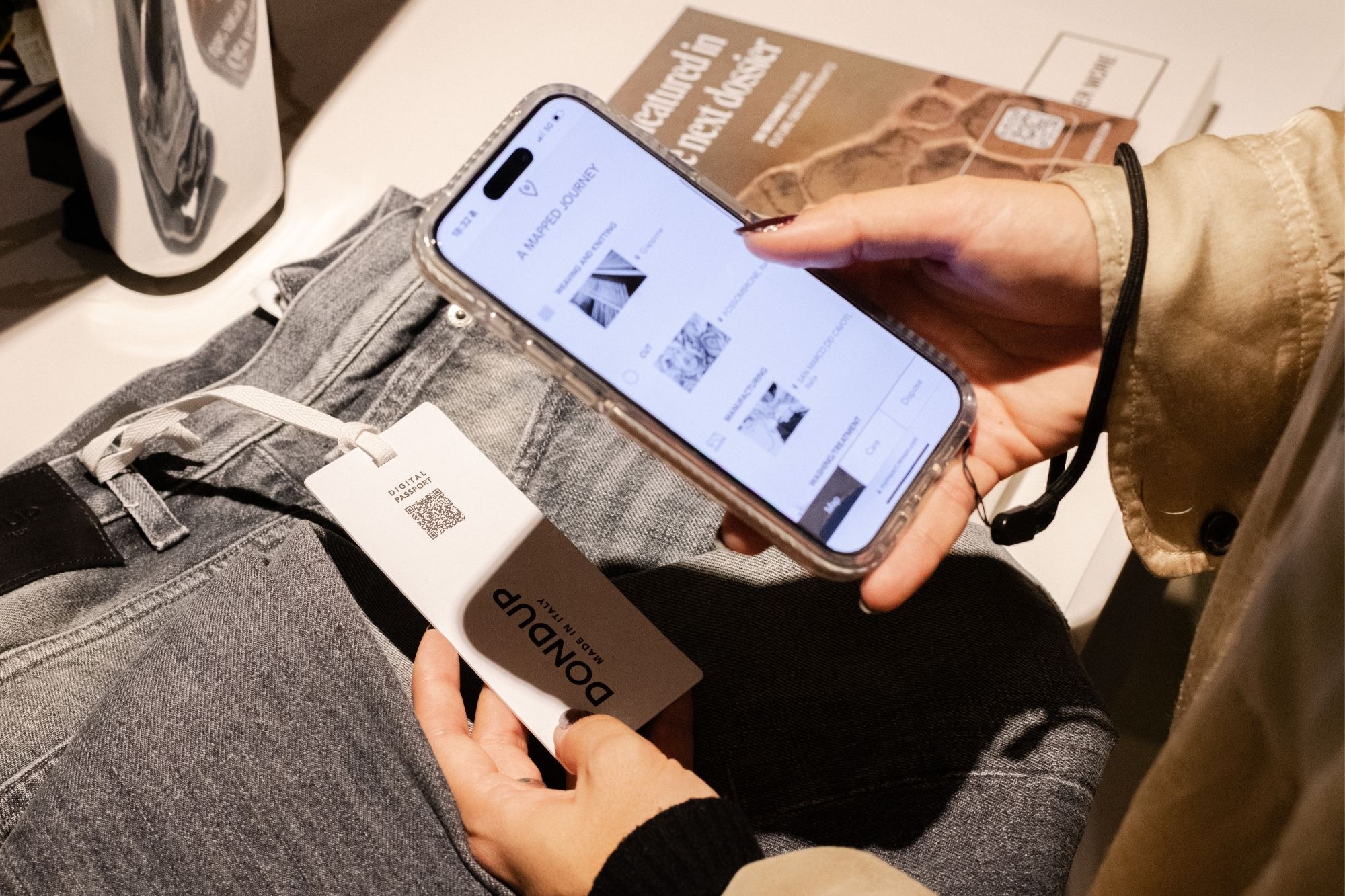
Under the ESPR, every Digital Product Passport must be accessible through a data carrier physically linked to the product, its packaging or accompanying documentation. The Textile Delegated Act will define the specific implementation requirements for textile products, in particular:
- type of data carrier
- placement requirements
- durability requirements
- readability requirements
While the ESPR does not prescribe a specific technology, current Digital Product Passport implementations for textile products typically rely on:
- QR code as the primary data carrier
- GS1 Digital Link to connect the physical product with its Digital Product Passport
- d Care labels or hangtags as the most common locations for the data carrier in apparel
- NFC or RFID for selected use cases, particularly where authentication, inventory management or premium product experiences are required
Digital Product Passport implementation examples for textile and apparel brands
Examples of Digital Product Passport implementations developed by Renoon across different textile and apparel categories.


.png)
.avif)