Toys placed on the EU market will require a Digital Product Passport under the new Toy Safety Regulation (EU) 2025/2509. The passport will connect each toy model to structured identification, conformity and safety-related information accessible digitally.
The Regulation already defines the core Digital Product Passport requirements for toys, including the minimum dataset, model-level passport, data carrier and 10-year availability period. This page summarises the current regulatory framework and implementation requirements.
What is the Digital Product Passport for toys?
The Digital Product Passport for toys is a digital record required under the new Toy Safety Regulation (EU) 2025/2509. Before placing a toy on the EU market, the manufacturer will need to create a DPP corresponding to a specific toy model and containing the mandatory information defined by the Regulation. The passport must be accurate, complete and up to date, connected to a persistent unique product identifier through a data carrier, and remain available for 10 years after the toy is placed on the market.
Toy Digital Product Passport regulatory framework
The Digital Product Passport for toys is established directly by the new Toy Safety Regulation (EU) 2025/2509, which replaces Directive 2009/48/EC. Unlike product categories where DPP requirements are still being developed under ESPR delegated acts, the Regulation already establishes the core DPP obligations for toys.
TOY SAFETY REGULATION
In force
Establishes the Digital Product Passport requirement for toys
ANNEX VI
Adopted
Defines the minimum mandatory DPP dataset
DPP TECHNICAL RULES
Further measures to follow
Will specify additional technical and implementation requirements
The Regulation applies from 1 August 2030, with certain provisions already applying from 1 January 2026. Toys lawfully placed on the market under Directive 2009/48/EC before 1 August 2030 may continue to be made available.
Toy products within the DPP scope
The Digital Product Passport requirement applies to toys falling within the scope of Regulation (EU) 2025/2509 and placed on the EU market. Under the Regulation, a toy is a product designed or intended, whether or not exclusively, for use in play by children under 14 years of age. Products excluded from the Regulation therefore fall outside this Toy Safety Regulation DPP requirement.
PRODUCTS COVERED CAN INCLUDE
- Dolls and figures
- Construction and activity toys
- Plush and textile toys
- Games and puzzles
- Ride-on and outdoor toys
- Electronic and connected toys
IMPORTANT: products can be subject to additional EU legislation depending on their characteristics. The Toy DPP is designed to coexist with other applicable Union requirements, and where another EU law also requires a DPP, the Regulation provides for a single Digital Product Passport containing the relevant information.
Digital Product Passport data requirements for toys
The minimum Digital Product Passport dataset for toys is already defined in Annex VI of Regulation (EU) 2025/2509. The passport must include:
- Unique product identifier
- Manufacturer information
- Authorised representative information, where applicable
- Responsible economic operator information
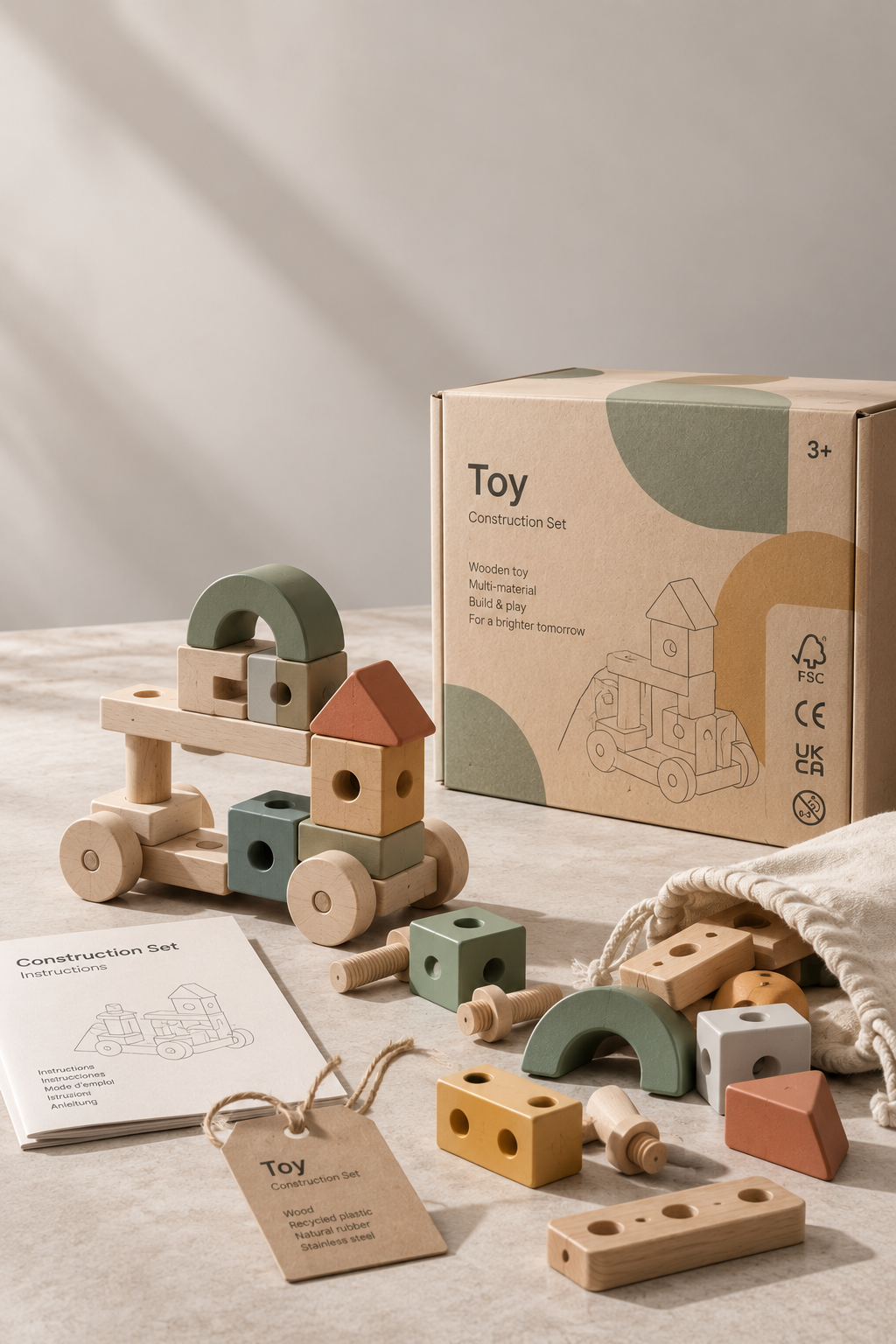
- Identification of the toy, including a clear colour image
- Commodity code, where applicable
- Applicable EU legislation
- Harmonised standards or common specifications
- Notified body and certificate information, where applicable
- CE marking
- Relevant allergenic fragrance information
- Required communication channel
- DPP service provider reference for the passport back-up copy
Safety information, warnings and instructions for use may also be included in the Digital Product Passport.
DPP data carrier requirements
The Toy Safety Regulation requires the Digital Product Passport to be connected through a data carrier to a persistent unique product identifier.
The data carrier must be:
- physically present on the toy or on an affixed label
- placed on the packaging or accompanying documentation where the size or nature of the toy does not allow placement on the toy
- clearly visible before purchase
- accessible also when the toy is sold through distance sales
Digital Product Passport Registry for toys
Before placing a toy on the market, the economic operator must upload the toy's unique product identifier and unique operator identifier to the EU Digital Product Passport Registry. For toys intended for release for free circulation, the Registry will also store the relevant commodity code.
The Registry will support market surveillance and customs controls, allowing authorities to verify the existence of a valid Digital Product Passport for toys entering the EU market.

.png)
.avif)
.png)