Bags and fashion accessories are not currently covered by a dedicated Digital Product Passport Delegated Act under the Ecodesign for Sustainable Products Regulation (ESPR).
However, many brands are already preparing product data and Digital Product Passport infrastructures that can support future regulatory requirements and product transparency initiatives.
Important scope note
Under Regulation (EU) No 1007/2011, products containing at least 80% by weight of textile fibres are treated as textile products. As a result, bags, accessories and other products meeting this definition may fall within the textile regulatory framework rather than a separate product category.
What is the Digital Product Passport for bags and accessories?
While no Digital Product Passport requirements have been adopted specifically for bags and fashion accessories, the ESPR establishes the framework through which future product groups may receive ecodesign requirements and Digital Product Passports via Delegated Acts.
Digital Product Passport regulatory framework for bags and accessories
At present, the European Commission has not announced a product-specific preparatory study or Delegated Act for bags and fashion accessories. Unlike textiles and footwear, this product category is not included among the first product groups currently undergoing regulatory preparation.
espr Working Plan
In force
Does not include a dedicated product group for bags and accessories
bags and accessories Delegated Act
Not yet announced
Would define mandatory requirements
Bags and accessories: what is currently known?
The European Commission has not yet published product-specific requirements for bags and fashion accessories.
CURRENTLY AVAILABLE INFORMATION
- No preparatory study has yet been announced.
- No DPP dataset has yet been defined.
- No implementation timeline has been published.
Preparing Digital Product Passport for bags and accessories
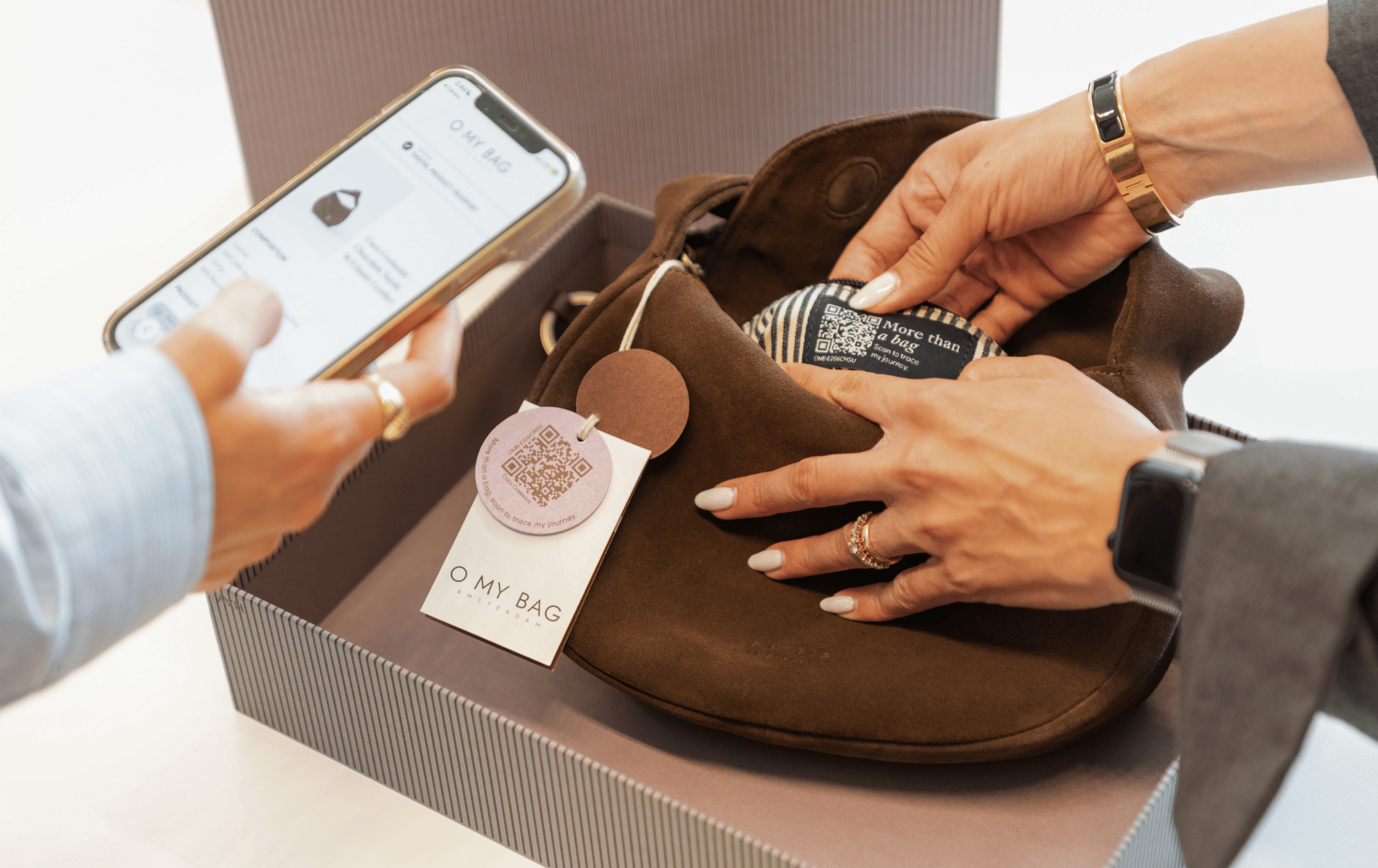
Although product-specific Digital Product Passport requirements have not yet been published for bags and accessories, many luxury and premium brands are already structuring product-level information. This creates a reusable data foundation for future compliance while supporting product transparency, authentication and after-sales services throughout the product lifecycle.
TYPICAL PRODUCT INFORMATION PREPARED TODAY
- Product identification (SKU, model, collection, season)
- Materials and components (leather, textiles, metal hardware, linings and trims)
- Country of manufacture and manufacturing information
- Supplier and material traceability
- Care and maintenance instructions
- Repair and relacement information
- Product authenticity and ownership information
- Technical information and supporting evidence
The final mandatory dataset will be established through the Textile Delegated Act and related implementing measures.
DPP data carrier requirements
Under the ESPR, every Digital Product Passport must be accessible through a data carrier physically linked to the product, its packaging or accompanying documentation. A product-specific Delegated Act will define the implementation requirements for bags and accessories, if any. In particular:
- type of data carrier
- placement requirements
- durability requirements
- readability requirements
Digital Product Passport implementation examples for bags and accessories brands
Examples of Digital Product Passport implementations developed by Renoon across different bags and accessories.