
.avif)
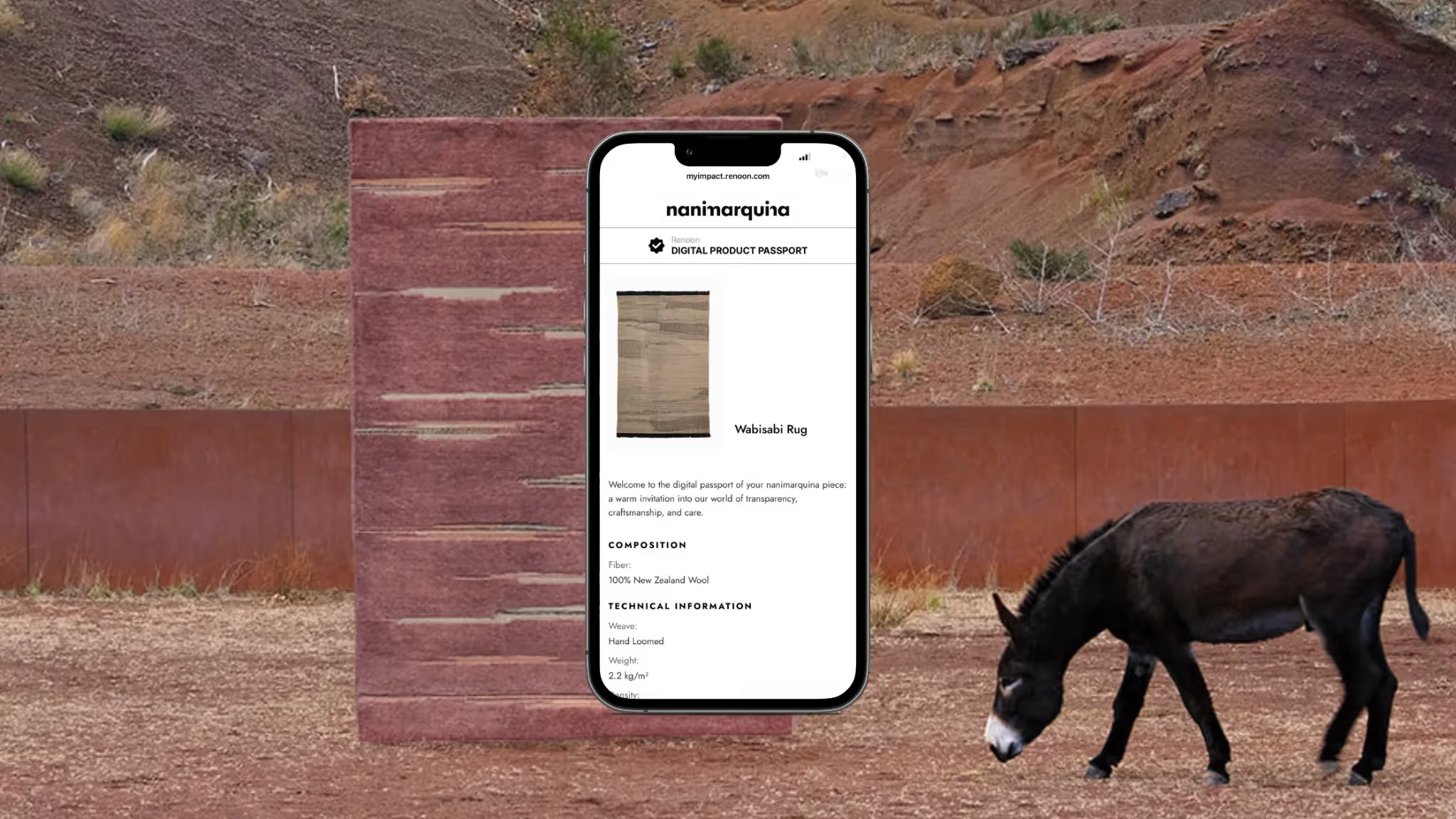
Nanimarquina introduces Digital Product Passports powered by Renoon, marking a first in the rug industry.
With over 35 years of experience in contemporary rug design, the brand has built its reputation on craftsmanship, material integrity, and longevity. The launch of Digital Product Passports formalises this commitment at product level, structuring verifiable information around sourcing, material impact, durability, and care.
This collaboration demonstrates how Digital Product Passports extend beyond fashion into design and home, where longevity and material intelligence are central.
For Nanimarquina, a rug is not simply a surface product. It is a material object shaped by fiber origin, craftsmanship, and long-term performance.
The brand works primarily with natural fibers such as Afghan and Indian wool, selected for durability, resilience, and aging quality. These materials are transformed through hand-loomed and hand-tufted techniques in India, Pakistan, and Nepal, preserving artisanal knowledge while ensuring structural integrity over time.
Material origin directly influences environmental impact and lifespan. Wool remains central to the collections not only for performance, but because it is renewable, recyclable, and compostable. When maintained properly, its longevity reduces overall impact across the product lifecycle.
By integrating this information into the Digital Product Passport, Nanimarquina structures fiber provenance, craftsmanship, and material impact at item level. Craft becomes documented data. Durability becomes measurable.
Nanimarquina is a member of CARE & FAIR, supporting fair and socially responsible sourcing conditions for artisan communities in India and Pakistan
The Digital Product Passport allows these commitments to be communicated through structured supply chain visibility.
Instead of isolated declarations, sourcing transparency is mapped within the product journey. This ensures that social compliance information is accessible, consistent, and connected directly to the rug itself.
Product transparency becomes embedded in the product experience.
Durability depends on maintenance.
With Renoon, Nanimarquina makes product-specific care and cleaning guidance accessible digitally through the passport. Care manuals and maintenance instructions are linked directly to each rug, ensuring that owners have long-term access to cleaning, repair, and handling information.
This supports:
End-of-life guidance becomes part of the product lifecycle, not an external document.
Nanimarquina’s Digital Product Passport marks more than a category first. It reflects a broader shift in how products are documented, accessed, and managed across their lifecycle.
In design and home, longevity has always defined value. What changes now is that this longevity becomes structured and digitally connected. Product information moves from internal files and brand narratives into a system that travels with the item itself.
This collaboration shows that Digital Product Passports are not limited to fashion. They apply wherever products are designed to last, maintained over time, and placed on the EU market under increasing expectations of product-level transparency and regulatory compliance.
Under the EU’s Ecodesign for Sustainable Products Regulation, Digital Product Passports are set to be introduced on a phased basis across priority categories such as textiles, furniture, and other physical goods placed on the market. Industry guidance indicates that furniture and home goods are among the product groups earmarked for Digital Product Passport requirements in the next wave of delegated acts, meaning that structured product documentation will soon become not just strategic, but compulsory for these categories.
Product transparency in home and interior categories is therefore not speculative, it is moving toward legal application.
The rug industry has taken a first step.
The Nanimarquina case shows how Digital Product Passports turn craftsmanship into structured product intelligence.
By connecting material origin, sourcing data, and care guidance into a single digital layer, products become documented, verifiable, and ready for evolving regulatory and market expectations.
Renoon supports brands in structuring what already exists, transforming product data into interoperable Digital Product Passports aligned with EU requirements.
Explore how your category can move from product narrative to product infrastructure. Book a demo with Renoon to start building your DPP roadmap.

.avif)
.png)

.png)