

Most discussions around Digital Product Passports focus on regulatory deadlines. For brands, however, implementation starts much earlier.
A Digital Product Passport depends on product data, supplier information, QR codes and digital touchpoints that are created throughout the product development process. By the time production begins, many of the decisions that determine what information will eventually appear in the Digital Product Passport have already been made.
Digital Product Passport implementation begins with product development. Each activity should be planned alongside the corresponding stage of the product lifecycle, from product creation to market launch.
A Digital Product Passport is built progressively as product information becomes available. Product identifiers, supplier information, QR codes and digital touchpoints are created at different stages of product development, and implementation should follow the same sequence.
Digital Product Passport activities should be integrated into existing product development processes, allowing product information to be collected, validated and prepared progressively as products move towards production and launch.
Implementation begins before product data is collected.
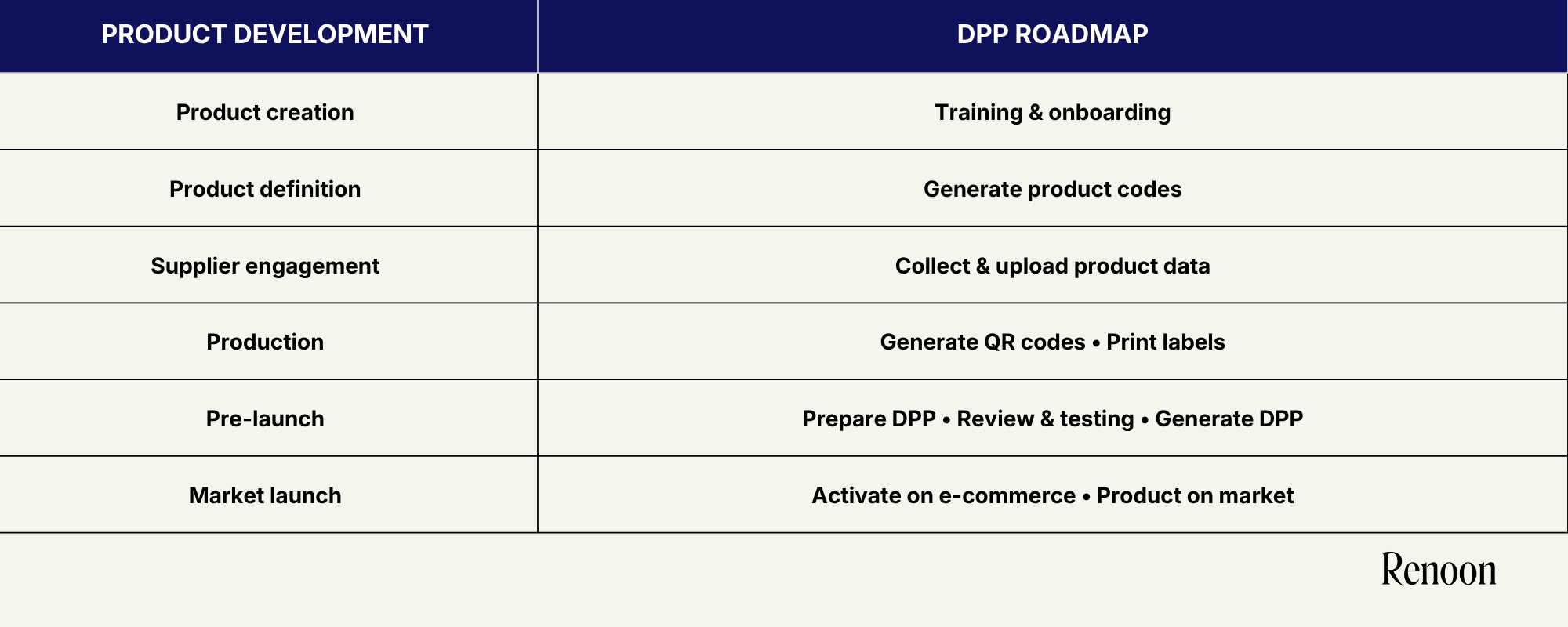
The first phase focuses on training and onboarding, aligning internal teams, defining responsibilities and identifying the systems involved. Product codes are then generated, creating the foundation that links every product, supplier submission and document throughout the implementation.
Once products have been defined, brands can begin collecting and uploading product information from internal teams and suppliers.
As product data becomes available, QR codes are generated, labels are prepared and the Digital Product Passport experience is configured, including product pages or microsites where required.
Before products leave the factory, brands should review product information, test QR codes and verify that every Digital Product Passport is complete and functioning correctly.
Once these checks have been completed, the Digital Product Passport is ready for deployment, allowing product information to be made available through the product’s QR code, online sales channels and, where required, the European Digital Product Passport Registry.
When products reach the market, the Digital Product Passport should already be available across product labels, packaging and e-commerce.
From this point onwards, product information can continue to evolve as documentation is updated, new information becomes available or regulatory requirements change.
Digital Product Passport implementation consists of a series of connected activities that take place throughout product development. Each phase provides the foundation for the next, allowing product information to be prepared progressively rather than at the end of the process.
The table below illustrates how these activities typically fit within an existing product development cycle.
Every product development process is different. We help brands build Digital Product Passport implementation roadmaps that align with their products, internal systems and supplier network.
Book a Digital Product Passport readiness session with Renoon to find out more.


.avif)
.avif)
.png)