
.avif)
.avif)
L'implementazione dei passaporti digitali di prodotto nell'ambito dell'ESPR segue una tempistica graduale che coinvolge gruppi di prodotti, atti delegati e infrastrutture tecniche.
Anziché essere applicati a tutti i prodotti contemporaneamente, i requisiti vengono introdotti progressivamente attraverso atti delegati specifici per categoria che definiscono:
Per i marchi, ciò si traduce in una tempistica di implementazione in continua evoluzione tra il 2025 e il 2030, con diversi gruppi di prodotti che entreranno a far parte del framework in fasi differenti.
This article is updated as new regulatory and technical milestones are confirmed. Last updated: September 2026.
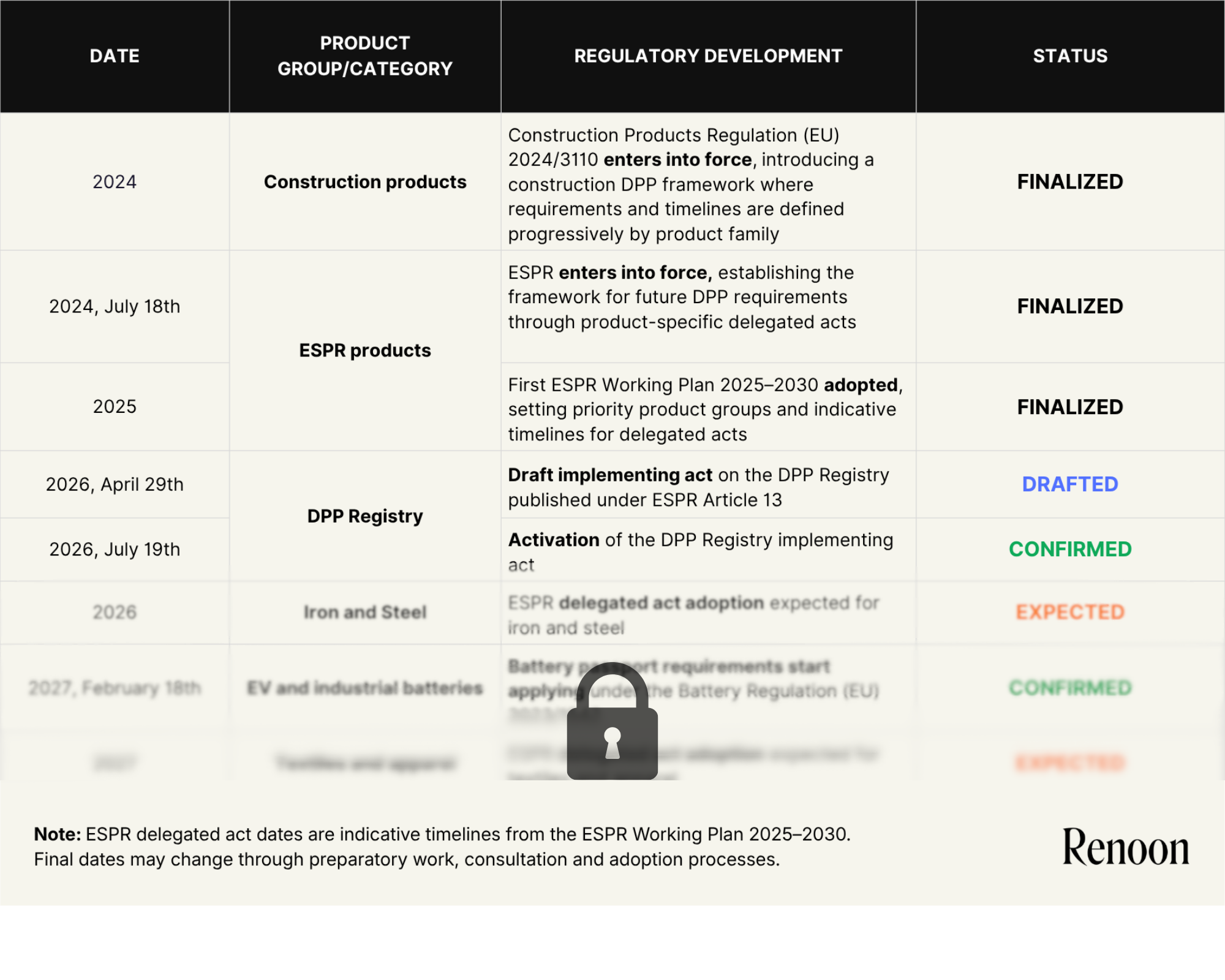
The Ecodesign for Sustainable Products Regulation (ESPR) entered into force in July 2024, establishing the legal framework for future Digital Product Passport requirements across product categories.
In questa fase, il regolamento definisce il quadro normativo di riferimento, mentre i requisiti specifici di prodotto vengono introdotti successivamente tramite atti delegati.
Il primo piano di lavoro ESPR, adottato nel 2025, individua i gruppi di prodotti che dovrebbero entrare nelle prime fasi di attuazione del quadro normativo.
Le categorie prioritarie includono:
The Working Plan does not yet define the final technical requirements for these categories. Instead, it establishes the expected sequence for preparatory work and future delegated acts.
In 2026, the EU Digital Product Passport infrastructure became operational through the launch of the DPP Registry and the publication of the first European technical standards. Other elements, including the rules for DPP service providers, remain under development.
Commission Implementing Regulation (EU) 2026/1778 was adopted on 16 July 2026, and the DPP Registry became operational on 20 July 2026.
Questa fase si concentra sull'infrastruttura a supporto dei passaporti digitali di prodottto, piuttosto che sugli obblighi relativi alle categorie di prodotto in sé.
The first mandatory product passports will begin applying in 2027, starting with the battery passport requirements for certain batteries on 18 February 2027. ESPR-based obligations for other product groups will apply only after the relevant delegated acts and transition periods.
Ciò include:
La tempistica varia a seconda di:
Per questo motivo non esiste un'unica data di implementazione valida per tutti i prodotti.
The ESPR itself does not define detailed Passaporto digitale di prodotto requirements for every product category.
Questi requisiti vengono invece introdotti progressivamente tramite atti delegati.
Ciascun atto delegato può definire:
Ciò significa che le tempistiche possono variare significativamente tra i diversi gruppi di prodotti.
Several operational layers of the Digital Product Passport framework are now in place, while product-specific requirements and certain implementation rules are still evolving.
Current developments include:
I marchi possono quindi già individuare le principali direzioni strutturali del framework, anche se i dettagli finali di implementazione sono ancora in fase di definizione nei diversi gruppi di prodotti.
Per i marchi, la sfida principale non consiste solo nell'individuare le date di compliance future, ma anche nel comprendere quali requisiti operativi si presentano prima di tali scadenze.
Renoon monitora costantemente gli atti delegati, gli sviluppi del Registry, le attività di interoperabilità e i requisiti futuri del passaporto digitale di prodotto in tutte le categorie di prodotti.
If you want to understand how these developments apply to your products, systems, or category, get in touch with our team to learn how the Renoon DPP Newstracker works and request access.


.png)

.png)
.png)