
.avif)
.avif)
The French AGEC Law is one of the first regulations in Europe requiring brands to disclose product-level environmental information directly to consumers.
For brands selling in France, this is no longer a matter of sustainability communication. It is a legal requirement.
This guide explains what the AGEC Law is, how Article 13 applies in practice, what information must be disclosed, and how brands can prepare.
This article reflects the current status and is updated as new regulatory developments are released. Last updated: April 2026
The AGEC Law (Anti-Waste for a Circular Economy) was adopted in 2020 to reduce waste, improve product transparency, and accelerate the transition to a circular economy.
It introduces requirements across multiple areas, including:
AGEC applies to companies placing products on the French market, including clothing, footwear, and household textiles.
What changes is not the scope, but the level at which requirements apply.
AGEC shifts sustainability from brand-level communication to product-level accountability.
Information is no longer defined at company level or through general claims. It must be structured, verified, and linked to each product.
This means that sustainability is no longer expressed through narrative.
It is defined through data that can be accessed, compared, and assessed at product level.
Article 13 of the AGEC Law introduces a key obligation:
Brands must provide consumers with information on the environmental qualities and characteristics of products.
This requirement is defined under:
This is the foundation of AGEC for fashion.
The requirements are being introduced progressively, based on company size and product volumes.
From January 1st 2025, the obligation applies to companies that:
This scope will expand over time to include smaller actors.
Under AGEC, brands must provide specific product-level information.
For fashion products, this typically includes:
The percentage of recycled material used in the product.
Information must be provided on the main stages of production.
These stages vary depending on the product category.
This requires linking product-level information to the actual manufacturing steps across the supply chain.
For synthetic textiles containing more than 50% synthetic fibres, whether the product releases microplastics during washing.
Products must disclose the presence of hazardous substances, where applicable.
Under AGEC, these are defined in line with:
This includes substances identified under Decree No. 2021-1285 and subsequent updates.
Restrictions on vague or misleading claims (e.g. “eco-friendly”).
Whether the product can be recycled — with important nuances depending on the category.
Under AGEC, environmental information must be made available in a way that is directly usable by consumers.
This means that information must be:
The requirement is not to publish reports or general disclosures.
It is to provide specific, product-level information that can be accessed and understood in the context of a purchase decision.
In practice, this typically takes the form of product pages or digital product information systems, where data is structured and maintained over time.
The AGEC Law builds on an existing regulatory system in France: Extended Producer Responsibility (EPR).
Under EPR, companies placing products on the market are responsible for their end-of-life, including collection, sorting, and recycling.
In the fashion sector, this system is managed by Refashion, the official eco-organisation for textiles, clothing, household linen, and footwear.
Refashion plays a central role in translating regulatory requirements into operational frameworks for brands. This includes:
Within the context of AGEC, this is particularly relevant for how product information is structured and disclosed.
For example, Refashion provides guidance on which environmental characteristics must be communicated to consumers, and under which conditions. It also clarifies important nuances, such as when certain information — like recyclability — is or is not required at product level.
This means that compliance with AGEC is not defined by the law alone.
It is shaped by how these requirements are interpreted and operationalised through the EPR system.
Failure to comply with AGEC requirements can result in administrative fines and requests to correct or withdraw information.
Non-compliance is not limited to missing information.
It also includes information that is incorrect, misleading, or not supported by verifiable data.
This shifts the risk from disclosure alone to data quality and consistency.
For companies, this affects not only regulatory compliance, but also how product information can be communicated, validated, and maintained over time.
AGEC introduces a structural shift that anticipates broader EU regulation.
It requires:
These are the same principles underpinning Digital Product Passports (DPPs).
AGEC is an early example of how product data becomes operational.
Compliance under AGEC requires:
Information must:
To comply with AGEC, companies need to:
This is where platforms like Renoon support brands: by structuring product data and aligning it with regulatory requirements. Discover how Renoon enables product-level data for AGEC requirements.
AGEC is already in force.
What is changing is who it applies to, and how requirements are clarified over time.
As of 2025, the law applies to companies placing more than 10,000 units on the French market and generating over €10 million in turnover.
This scope will expand progressively, bringing smaller companies and additional product categories into scope.
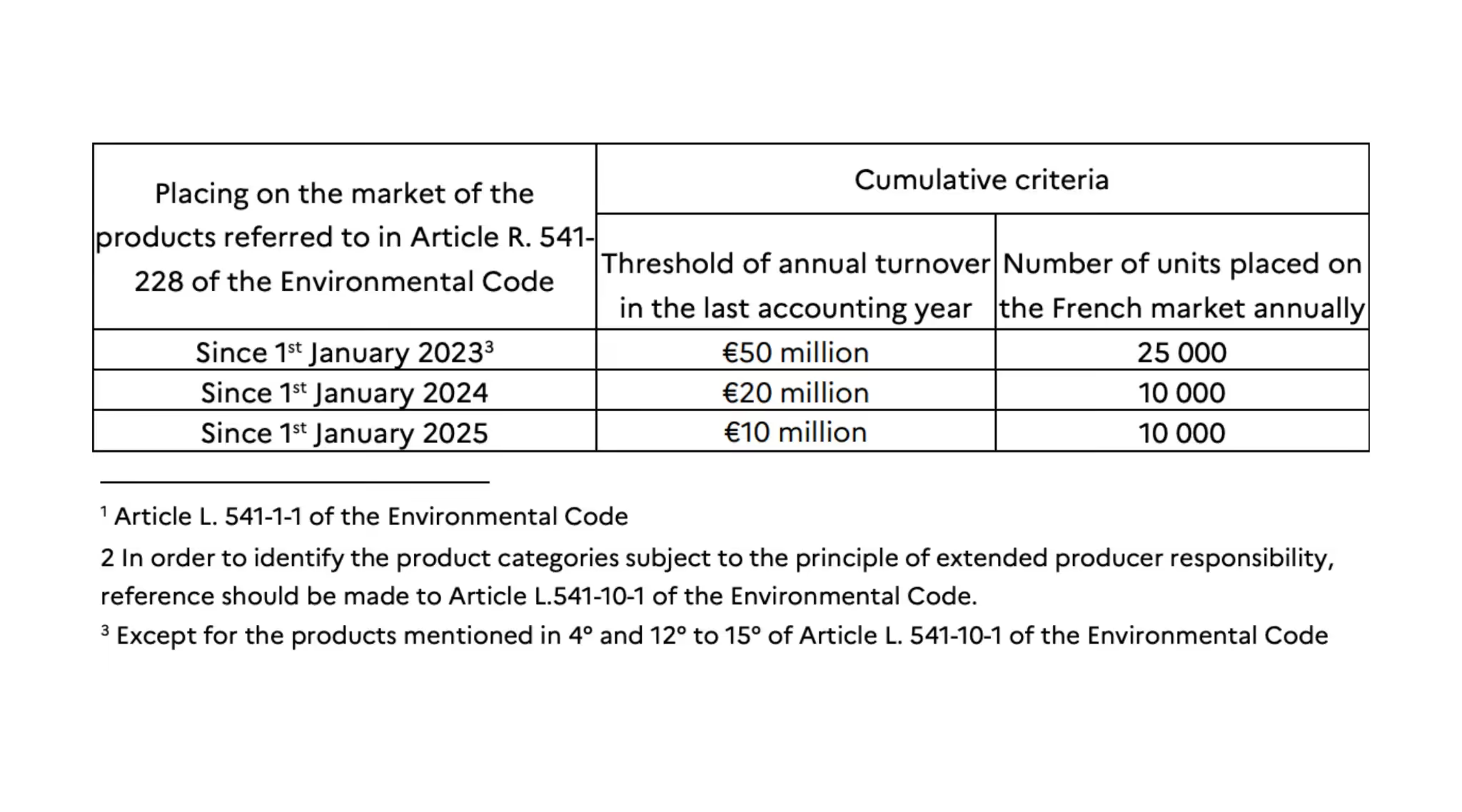
In parallel, organisations such as Refashion and the French authorities continue to clarify how requirements should be applied in practice, particularly around product-level information and disclosure.
This means that while the legal framework is stable, how it is implemented continues to evolve.
For fashion brands, this is not only a compliance requirement.
It is a change in how product data needs to be defined, managed, and made accessible over time.
Tracking these updates is essential, as requirements become more specific and operational over time.
Explore Renoon’s DPP Newstracker to stay aligned with regulatory developments and understand how they apply to your products.

.png)
.avif)